


Bladder inflammation often worries women.Of course, they are interested in how to deal with the disease quickly and without adverse consequences.What treatment is most effective in not only quickly relieving pain symptoms but also leading to full recovery.In addition to medication, you can also use traditional methods after mandatory consultation with a doctor.Prompt, thorough treatment will produce results quickly.
initial symptoms
Acute cystitis always occurs suddenly after stress, viral infection, hypothermia, or any other factor that disrupts local immunity in the bladder.
Initial symptoms in women include frequent trips to the bathroom, pain while urinating, and lower abdominal pain.Additionally, the more difficult it is to clean, the more women need to use the toilet.In severe cases, it occurs every half hour.
The pain bothers the patient around the clock.Pain in the stomach during and outside of urination.Feeling uncomfortable and painful in the abdomen.
Frequent painful impulses can cause the detrusor (the muscle that releases urine) to contract.At the same time, increased pressure in the body and even a small amount of urine accumulation can cause urinary urgency.
The urine was turbid during examination.Decreased clarity is caused by the accumulation of microorganisms, epithelial cells, white blood cells, and red blood cells in the urine.
Blood may be found at the end of urination.Its source is loose and inflamed bladder mucosa.
Another symptom is an increase in body temperature.For chronic cystitis, it can remain at normal levels.
How to differentiate between chronic cystitis and acute cystitis?
The clinical manifestations, or rather its exacerbation, of chronic cystitis in women do not differ from acute inflammation.But the symptoms are less obvious.For example, body temperature may not be elevated or may be low.The pain is not noticeable and urination is not as frequent as during the acute course.
In addition, chronic cystitis in women rarely occurs alone.Most of these exacerbations occur in the context of existing pathology in the bladder, ureters, kidneys, or urethra.Therefore, if a woman is diagnosed with diverticula, tumors, stones, chronic pyelonephritis, urocervical sclerosis, etc. despite existing symptoms, chronic cystitis is likely to occur.
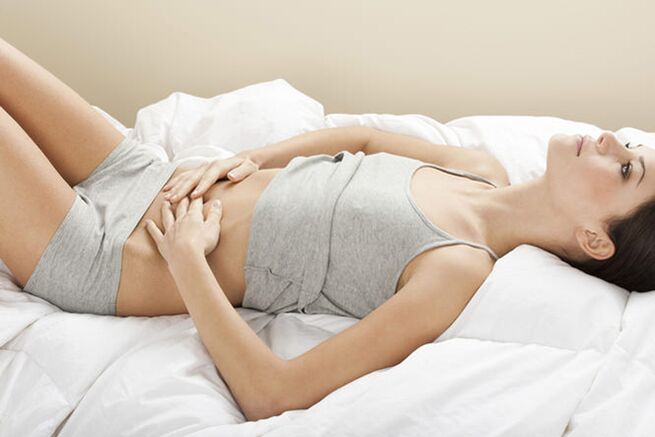
Cystitis during pregnancy and menopause
Pregnancy is a period of high incidence of cystitis.The hormonal background changes, that is, progesterone levels increase, the smooth muscles of the urethra relax, and the opening widens.This makes it easier for E. coli and other bacteria to penetrate the bladder and cause inflammation.
The symptoms of cystitis during pregnancy are in many ways similar to the course of the disease in non-pregnant women.However, if there is no pain when urinating and the only symptom is frequent urination, cystitis may not be detected early.This is because the uterus creates pressure during pregnancy and the frequency of urination normally increases.Therefore, to rule out this possibility, all pregnant women undergo urinalysis once a month starting from the 20th week of pregnancy and every 7 days starting from the 30th week.
Cystitis also occurs frequently in postmenopausal women.This is due to a decrease in fertility and, accordingly, a change in the amount of female hormones.A decrease in estrogen affects not only the genitals, but also the bladder.Its mucous membranes change, becoming thinner, looser, and prone to injury.
The clinical signs (symptoms) of cystitis in menopausal women are not specific.
disease treatment
In addition to asking women to stay in bed, drink plenty of fluids, and eliminate irritating foods from their menus, doctors will prescribe treatment based on medical history as soon as the first symptoms appear.What medications are used for treatment?
- First of all, these are antibiotics
In most cases, taking antimicrobials will result in significant improvement within 3-4 days.Typically, in urology, protected penicillins, cephalosporins, aminoglycosides, fluoroquinolones and nitrofurans are prescribed depending on the severity of the condition, medical history, presence of associated pathology and test results.
- Combine antibiotics with antispasmodics and analgesics
For chronic cystitis in women, the medication is injected into the bladder.Use silver nitrate, sea buckthorn oil, and rosehip oil.They have anti-inflammatory and antiseptic properties.And importantly, they only work at the site of inflammation, rather than affecting the entire body.
What folk remedies are used to treat cystitis?
Decoctions and infusions of various herbs and berries are very popular among patients suffering from cystitis.Anti-inflammatory, antiseptic, antispasmodic and weak diuretic effects include:
- ponytail,
- bear fruit,
- cranberry,
- Knotweed,
- bilberry leaves,
- chamomile soup,
- Kidney tea.
Herbal decoctions acidify the urine, making it less suitable for bacterial growth.Additionally, taking the decoction increases the amount of fluids you drink each day, which can lead to increased urine output, which flushes the bladder to clear the infection.
For maximum therapeutic effect, the decoction must be taken fresh.This herb can be purchased in pharmacies already dried, tested for parasites and packaged.
Cranberries are rich in benzoic acid, which has antibacterial and disinfectant properties, and flavonoids, which scavenge free radicals.You can use the berries to make juice drinks or juice.For juice, take 0.5 kg of cranberries, wash them thoroughly and grind them in a blender or mortar.Strain into a container through cheesecloth, pour about 2.5 liters of cold boiled water and add sugar to taste.
Prepare juice from a handful of berries and drink immediately.Warm the cranberries slightly so they release their juices better and chop.Then squeeze through several layers of gauze.
Traditional recipes can be used as an additional component of treatments prescribed by doctors.Be sure to ask him if traditional treatment methods are appropriate and won't cause harm.